


Foodservice has become one of the most effective drivers of frequency, attachment, and ticket lift in convenience retail. Coffee programs, bakery offerings, and hot food no longer function as standalone add-ons; they influence how customers move through the store, how long they dwell, and what else they purchase.
To capture that value, foodservice must be designed as a flexible, modular zone rather than a fixed installation. When traffic flow, utilities, equipment, and millwork are planned together, operators can pilot, expand, or swap programs with minimal downtime while maintaining safety, ADA compliance, and brand consistency. At scale, flexibility isn’t just operationally convenient; it is a competitive advantage.
Executive Summary
The shift is undeniable. According to NACS State of the Industry data, foodservice contribution to in-store sales has more than doubled over the last two decades, now accounting for 27.7% of sales and nearly 40% of gross margin.
As operators look to protect and grow this critical category, the physical environment must adapt to support it.
Why Flexible Foodservice Matters in C-Store Design
Convenience stores are now competing directly with QSRs, specialty cafés, and grocery grab-and-go formats that iterate menus and experiences quickly. Static foodservice layouts make it difficult to respond to those pressures. Every change becomes a construction project, and every test becomes a risk.
Flexible convenience store design changes that equation. By designing for adaptability upfront, operators can evolve offerings by daypart, season, or market demand without starting over.
The numbers confirm this urgency. NIQ data cited by Technomic shows that convenience stores with a foodservice share above 20% are growing total sales by 3.9%, compared to -0.1% for the industry average (where foodservice represents just 9.9% of sales).
KRS has also explored this shift from a market perspective. In Are West Coast C-Stores Missing a QSR Opportunity?, the growing overlap between convenience retail and QSR expectations underscores the need for layouts that can evolve as menus and service models change.
Planning the Zone: Flow, Menu Visibility, and Impulse
Strong performance starts with how the customer encounters the zone, not with equipment selection.
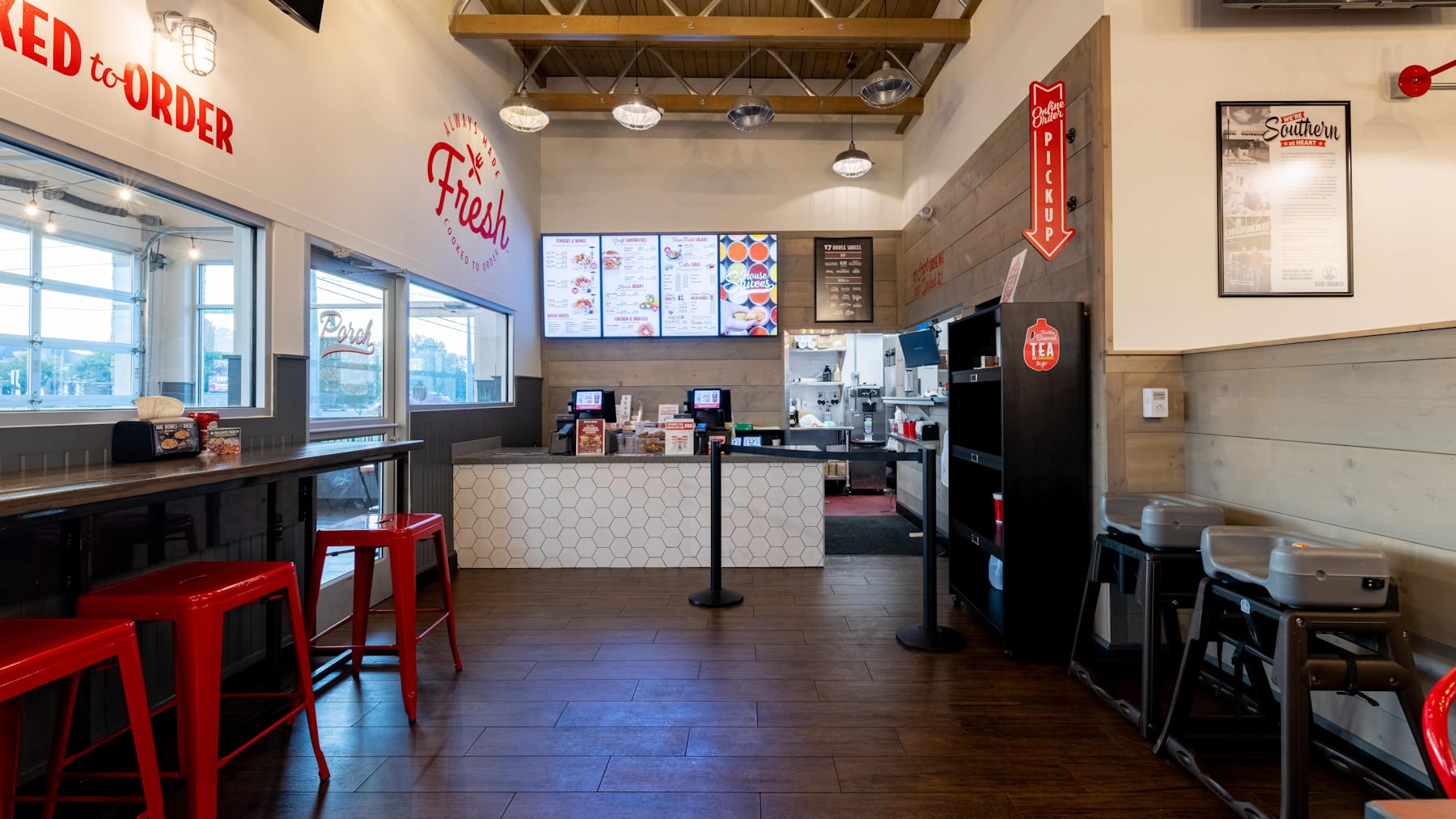
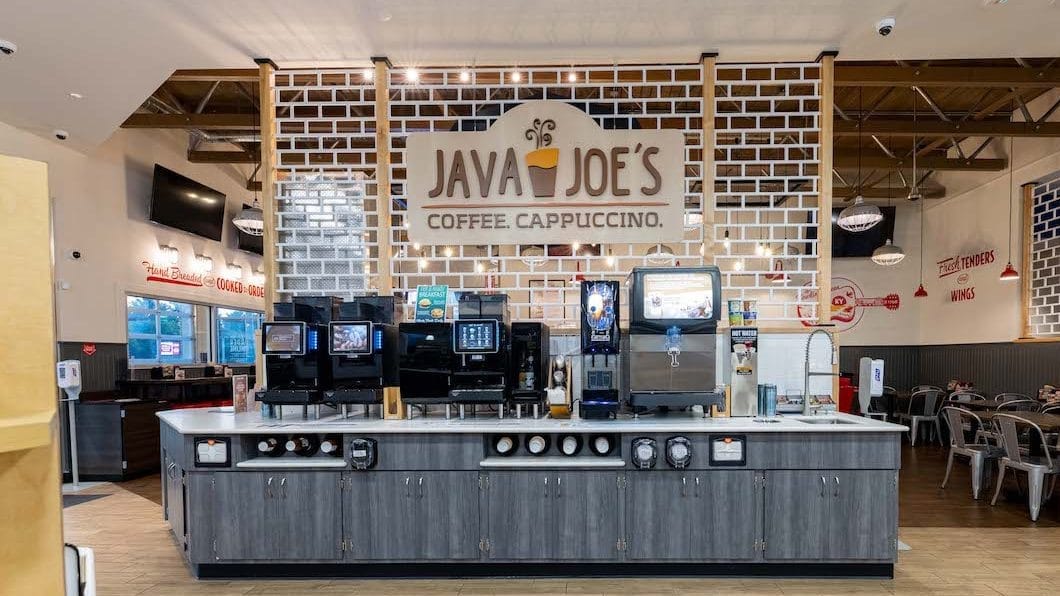
Effective zones are placed along primary traffic paths, with clear sightlines enabling customers to see options before choosing. Sequence coffee, bakery, and hot foods to prompt natural add-ons instead of forcing customers to choose out of order.
Place impulse items where customers pause—at decision points, transitions, or queue exits. This is key for reaching the afternoon shopper, now 58% of all c-store trips, according to Acosta Group.
Projects like Houchens Crossroads Express demonstrate how thoughtful zone planning and visibility into fresh and prepared foods can elevate engagement. By prioritizing open sightlines and logical adjacencies, the layout reinforces foodservice as a destination rather than a secondary stop.
When flow is intuitive, attachment follows naturally.
The Trust Factor: Why Design Must Prove Quality
But “legitimate” does not mean guaranteed. To turn sentiment into sales, the space must show quality. As seen in our Supermarket Design Ideas insight, transparency and freshness cues are essential, regardless of the industry. If customers can’t see quality, they won’t trust it.
Equipment and Utilities: Designing for Change
Flexibility is won or lost behind the scenes.
Too often, utilities are designed for a single piece of equipment, locking the store into a specific program. When that program underperforms or evolves, operators face costly retrofits or extended downtime.
Future-ready foodservice equipment layouts account for change from the beginning. That means planning electrical capacity, plumbing, ventilation, and data access to support multiple equipment configurations. It also means coordinating equipment specs early enough so that design drawings reflect real operational requirements.
This approach lets operators swap a bakery case for a hot-holding unit or expand a coffee program without reworking core infrastructure.
Ready to upgrade your offerings and grow sales?
Modular Millwork and Décor: Physical Flexibility at Scale
If utilities enable flexibility, modular millwork makes it visible.
Well-designed modular systems use standardized dimensions, interchangeable panels, and adaptable signage, enabling easy zone reconfiguration without replacing fixtures. Materials must be durable but still support brand expression.
The Power Market concept illustrates how modular millwork can function as a flexible blueprint rather than a one-off solution. Designed to scale across different footprints, the concept allows foodservice zones to flex while maintaining consistent layout logic and brand presence. This foresight reduces redesign effort significantly as the brand expands.
Execution at Scale: From Prototype to Rollout
Flexible foodservice zone design only matters if it can be deployed consistently.
Successful programs typically follow a clear progression: prototype in live environments, refine based on operational feedback, standardize modules and specs, then roll out with quality and compliance checkpoints. For brands looking to grow, moving From Trends to Practical Design Execution is the only way to ensure ROI.
Without that discipline, flexibility rarely translates from paper to the field.

Mini Case: Coffee-Led Redesigns and Daypart Expansion
Recent coffee-focused redesigns show how flexible zones support daypart growth beyond the morning rush. By pairing open sightlines with modular counters and future-ready utilities, operators were able to evolve offerings over time by introducing bakery and hot food programs without shutting down the zone.
In the ExtraMile redesign, branded coffee environments helped anchor the in-store experience while remaining adaptable for rollout across locations. While the case centers on brand expression, it reinforces a broader principle: when foodservice zones are designed as systems rather than fixtures, they can support both experiential and operational goals.
What to Measure
To understand whether flexible foodservice design is delivering value, operators should track metrics tied directly to layout decisions:
- Beverage-to-food attachment rate
- Dwell time within foodservice zones
- Conversion between coffee, bakery, and hot foods
- Average ticket lift by daypart
These measures connect physical design to financial performance and help guide future refinements.
Key Takeaways
Flexible foodservice zones are no longer optional in modern convenience retail. Start designing for modularity, adaptable infrastructure, and intuitive flow now to outpace competitors and avoid costly rebuilds or operational disruption.
By designing for change, foodservice operations, from coffee bar to hot case, achieve durable growth by staying adaptable and relevant in a shifting market.
Frequently Asked Questions
Q. What is a flexible foodservice zone in a convenience store?
A. A flexible foodservice zone is a modular, future-ready area designed to support multiple food and beverage programs—such as coffee, bakery, and hot food—through adaptable layouts, utilities, and millwork that can evolve with changing demands.
Q. Why is modular millwork important for c-store foodservice?
A. Modular millwork gives operators the ability to reconfigure menus and equipment without replacing fixtures. This reduces cost, limits downtime, and minimizes disruption while preserving brand consistency across locations.
Q. How does foodservice zone design impact daypart performance?
A. Design elements like visibility, customer flow, and adjacency directly influence whether shoppers add food to beverage purchases. Well-planned zones increase conversion across morning, midday, and evening dayparts—especially important as the majority of trips now occur later in the day.
Q. What should be planned early to support future menu changes?
A. Early planning should account for equipment clearances, electrical capacity, plumbing, ventilation, and data access. Designing these systems for multiple use cases ensures flexibility as menus and programs evolve.
Q. How do operators measure success after a foodservice redesign?
A. Success is typically measured through metrics such as attach rate, dwell time, food-to-beverage conversion, and average ticket lift by daypart, providing insight into both customer behavior and operational performance.
