
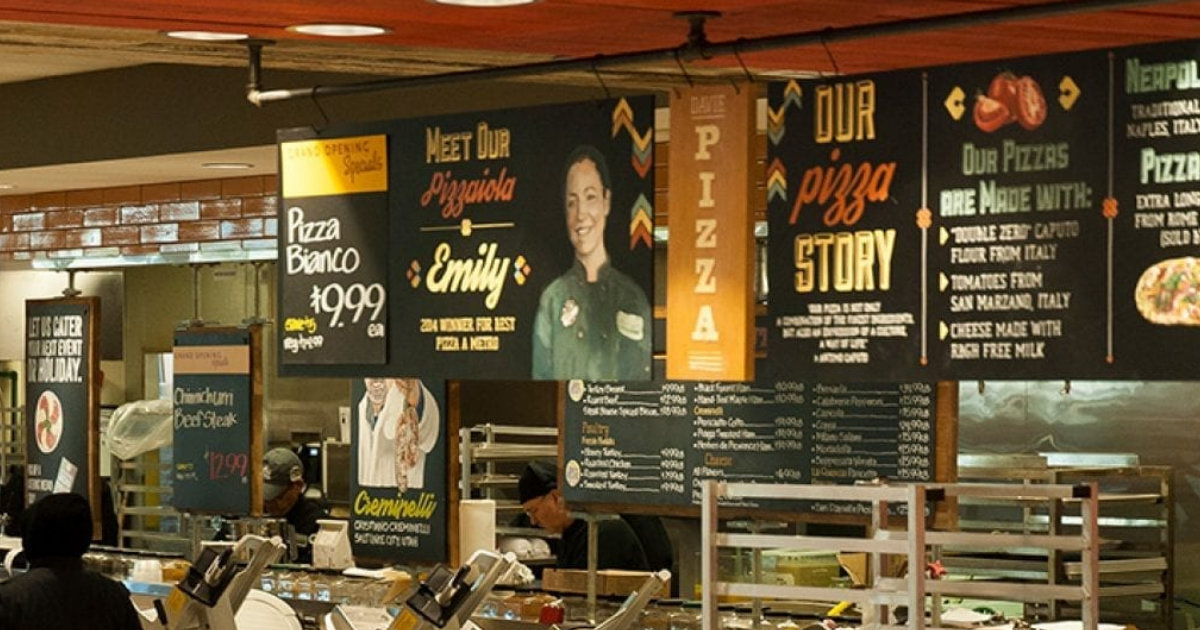
As part of their grab-and-go offerings, many grocery stores offer shoppers hot food counters and salad bars. Yet with continuously evolving consumer needs and preferences, this might be a thing of the past.
Of course, people still want the convenience of prepared food, but self-serve models may no longer be the preferred choice for consumers. So, what’s next? Some signs point to ghost kitchens. The grocery store design consultants at King Retail Solutions are here to offer helpful insight into this trend.
What Is a Ghost Kitchen?
A ghost kitchen is essentially a facility where food is prepped and cooked for paying customers (not unlike a restaurant kitchen). Unlike restaurants, food carts, and drive-thrus, most ghost kitchens don’t have a dining area, takeout window, or storefront. Customers never see the inside because they only offer delivered food.
Why Some Supermarkets Are Implementing Ghost Kitchens
Since a ghost kitchen isn’t supposed to be seen by customers, it could theoretically go anywhere, including inside a supermarket. As grocery store layouts adjust to the changing demands (and appetites) of shoppers, many owners are considering implementing on-premise ghost kitchens. What’s in it for them? There are a few reasons why grocers are embracing the trend.
- Supermarket owners can charge rent for the space used by restaurants.
- Store owners can continue profiting off of hot food sales, even if the kitchen is branded as something else.
- Kitchens are inclined to buy ingredients and supplies from the grocery store.
It’s not just the grocery stores that profit, either. Building ghost kitchens inside grocery stores is a win-win, providing ample benefits to restaurant owners.
- By cooking food in densely populated markets, cafes are likely to see a spike in delivery orders.
- Forgoing a storefront and dining room means eateries can save money on renting or buying real estate in a popular area.
- Catering to the demands of modern consumers and saving money on real estate puts restaurants in a good position to expand.
While it’s tough to predict exactly where food trends are going, ghost kitchens seem to be a safe bet for grocers and restaurants, especially with flexible agreements.
What This Means for Grocery Store Design
Pivoting to a ghost kitchen model might seem simple enough—people were already cooking back there, after all. However, successfully implementing the change will require some critical thinking and the careful planning of the grocery store’s layout and design.
Textbook Ghost Kitchen
You can choose to take a straightforward approach in which customers order food from the ghost kitchen just like they would any other restaurant. In that case, you’d rely on meal delivery apps or an internal team to get the food to people’s doorsteps.
Integrated Approach
Alternatively, you could integrate the service by way of a one-stop-shop model. Whether on their smartphones or through a strategically placed kiosk, shoppers can order food from the ghost kitchen and bring their takeout home. For this model, you’d need to have some sort of pickup window.
In any case, the concept should be thoroughly fleshed out to ensure it’ll be profitable for all parties involved. KRS has a keen understanding of the continuously blurring lines between grocery and prepared food services, and we can help you connect the dots.
KRS: Your Resource for Grocery Store Design, Layout, and Planning Services
Overhauling your store (or even a portion of your store) calls for custom retail interior design. The team at KRS can help your supermarket create a layout that works for the unique needs of your business, as well as nearby consumers and any restaurants involved. From design and planning to fabrication, installation, and retail decor, we do it all.
Summary
Self-serve food models in grocery stores, like hot food counters and salad bars, are being challenged by evolving consumer preferences.
Ghost kitchens—delivery-focused kitchens without storefronts—offer a new way for supermarkets to provide prepared meals. By integrating ghost kitchens into grocery layouts, retailers can generate additional revenue, support restaurant partners, and meet the convenience and quality expectations of modern shoppers.
Thoughtful design, technology integration, and layout planning are key to maximizing profitability and customer satisfaction.
Key Takeaways on Ghost Kitchens in Grocery Stores
- Ghost kitchens are delivery-only facilities, which can operate inside grocery stores without a storefront or dining area.
- They allow supermarkets to profit from prepared food sales while partnering with restaurants or third-party operators.
- Supermarkets can lease space to ghost kitchen operators, boosting revenue and driving ingredient sales.
- Restaurants benefit from reduced real estate costs and increased delivery volume in densely populated areas.
- Integration options include standalone ghost kitchen services or pickup points for one-stop-shop convenience.
- Successful implementation requires careful layout, interior design, and operational planning.
- Pivoting to ghost kitchens aligns grocery stores with modern consumer demands for convenience and high-quality prepared meals.
- Flexible agreements and thoughtful design ensure profitability for both grocery retailers and restaurant partners.
- Ghost kitchens blur the lines between grocery retail and foodservice, creating new opportunities for innovation in-store.
Frequently Asked Questions
Q. What is a ghost kitchen?
A. A ghost kitchen is a delivery-focused kitchen that prepares meals for customers without a storefront, dining area, or takeout window. Customers only receive food via delivery or pickup.
Q. Why are grocery stores considering ghost kitchens?
A. Ghost kitchens provide an opportunity to profit from prepared food sales, lease space to restaurant operators, increase ingredient purchases from the store, and meet evolving consumer demands for convenience.
Q. How can restaurants benefit from ghost kitchens inside grocery stores?
A. Restaurants save on real estate costs, increase delivery volume, and can expand in densely populated markets without investing in a storefront or dining area.
Q. What are the different approaches to integrating ghost kitchens?
A. Options include a standalone model where customers order via delivery apps, or an integrated one-stop-shop approach where shoppers order and pick up meals in-store through kiosks or pickup windows.
Q. What role does store design play in implementing ghost kitchens?
A. Layout, interior design, and operational planning are critical to ensure the ghost kitchen integrates smoothly, maximizes profitability, maintains customer flow, and enhances the overall shopping experience.